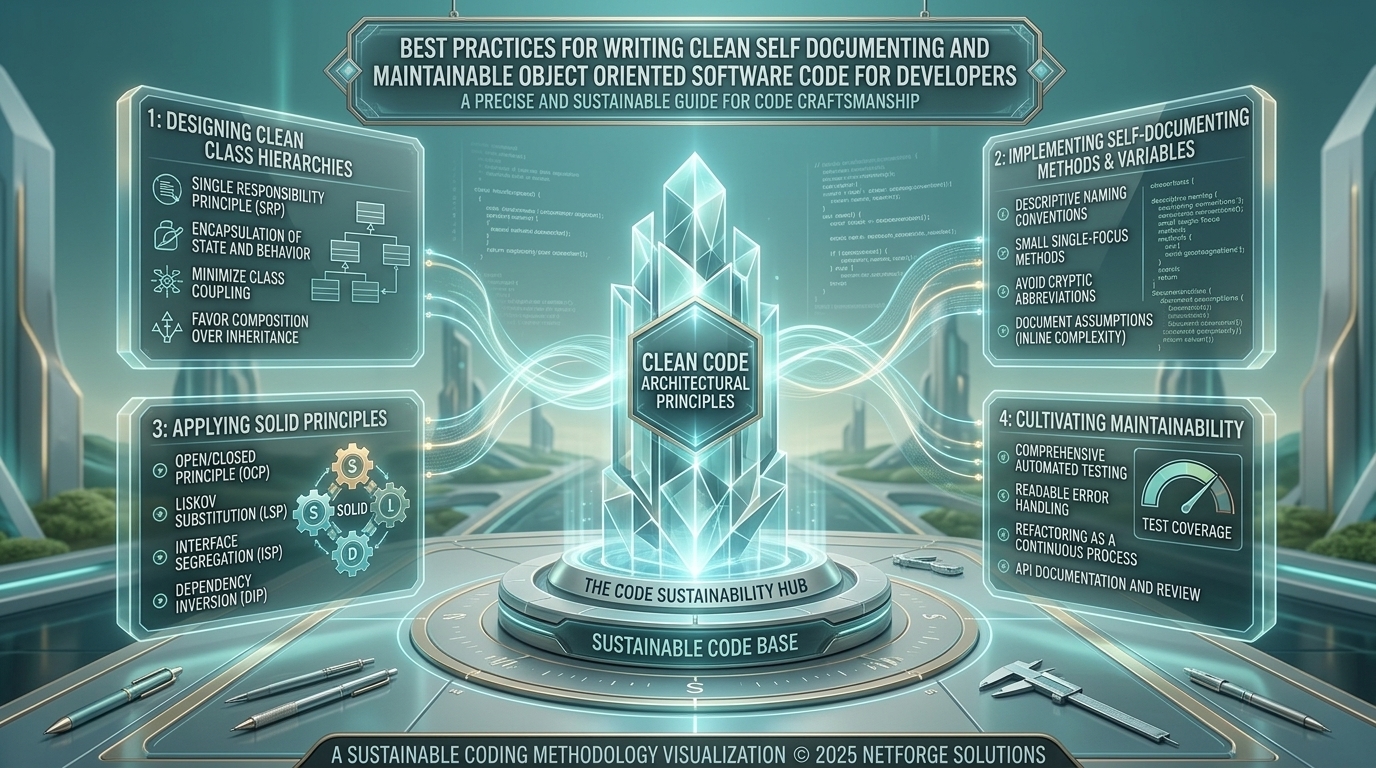
As modern enterprise software engineering operations scale across dominant technological hubs—from the bustling tech corridors of San Francisco, Silicon Valley, and Seattle to enterprise software centers in New York, Texas, and Washington—code maintainability has become a vital determinant of business success. Whether powering high-traffic e-commerce systems, scalable pet care platforms like bestpetstuff.com, or complex cloud infrastructure backends, codebases inevitably spend more time being read, modified, and debugged than they do being written for the first time.
When development teams neglect software craftsmanship, codebases quickly descend into tightly coupled monoliths fraught with code smells, hidden side effects, and incomprehensible logic. Reversing this technical decay requires strict adherence to clean, self-documenting, and maintainable object-oriented programming (OOP) principles.
This comprehensive guide explores the structural patterns, SOLID principles, naming conventions, refactoring strategies, and best practices required to write clean, self-documenting object-oriented code that remains maintainable across years of enterprise growth.
1. The Architectural Philosophy of Clean Code
To understand why clean object-oriented code matters, developers must recognize that code is written primarily for human consumption, with machine execution being a secondary byproduct.
[ Developer Intent ] ──► [ Expressive Naming & Small Methods ] ──► [ Self-Documenting Code ] ──► Low Maintenance Overhead
- The Myth of Code Comments: A common anti-pattern in legacy codebases is writing extensive comments explaining what bad code is doing. Clean code should be inherently transparent; if a method requires a paragraph of comments to explain its internal logic, the code itself is poorly structured.
- The Cost of High Cyclomatic Complexity: Methods that span hundreds of lines and handle multiple responsibilities create cognitive overload. Breaking logic down into small, cohesive, single-responsibility units drastically reduces bug rates and accelerates developer onboarding.
2. Core Object-Oriented Principles for Maintainable Code
Maintaining a clean object-oriented architecture requires rigorous adherence to foundational design principles.
1. Mastering the SOLID Principles
- Single Responsibility Principle (SRP): A class or module should have one, and only one, reason to change. If a
PetProductclass handles database persistence, pricing tax calculations, and UI formatting simultaneously, it violates SRP and must be decomposed. - Open/Closed Principle (OCP): Software entities should be open for extension but closed for modification. New functionality should be added by introducing new classes or implementing interfaces rather than hacking existing legacy methods.
- Dependency Inversion Principle (DIP): High-level modules should not depend on low-level modules; both should depend on abstractions. Utilize interfaces and dependency injection to decouple business logic from concrete database drivers or external APIs.
3. Step-by-Step Implementation Blueprint for Clean Codebases
Step 1: Enforcing Intent-Revealing Naming Conventions
Variable, method, and class names must communicate intent instantly without requiring internal code inspection.
- Classes Are Nouns: Use clear, domain-specific nouns for classes (e.g.,
ShoppingCartRepository,UserAuthenticationService). - Methods Are Verbs: Use precise verb phrases for methods that perform actions (e.g.,
calculateShippingRate(),validateCustomerSession()). Avoid vague naming prefixes likeprocessData()orhandleStuff().
Step 2: Keeping Methods Small and Focused
Apply the Rule of Small Functions: methods should ideally fit within a single screen view (under 15 to 20 lines) and perform a single, atomic operation.
TypeScript
// Anti-Pattern: Monolithic, complex method handling multiple tasks
function processOrder(order: Order) {
  // 50 lines of database validation, pricing math, email notifications, and inventory updates...
}

// Clean Pattern: Single Responsibility and descriptive method extraction
class OrderProcessor {
  constructor(
    private pricingService: PricingService,
    private inventoryService: InventoryService,
    private notificationService: NotificationService
  ) {}

  public async completeOrder(order: Order): Promise<void> {
    this.validateOrderItems(order);
    const finalPrice = this.pricingService.calculateTotal(order);
    await this.inventoryService.reserveStock(order);
    await this.notificationService.sendConfirmationEmail(order, finalPrice);
  }

  private validateOrderItems(order: Order): void {
    if (!order.items.length) throw new Error("Order cannot be empty");
  }
}
4. Best Practices for Long-Term Code Maintenance
+-----------------------------------+-----------------------------------+
| Maintenance Strategy              | Best Practice Implementation      |
+-----------------------------------+-----------------------------------+
| Automated Linting & Formatting    | Enforce strict style guides via   |
|                                   | ESLint, Prettier, or language     |
|                                   | equivalent linters                |
| Comprehensive Unit Testing        | Write unit tests alongside domain |
|                                   | logic to verify class contracts   |
| Continuous Code Refactoring       | Apply the Boy Scout Rule: leave   |
|                                   | code cleaner than you found it    |
+-----------------------------------+-----------------------------------+
- Eliminate Magic Numbers and Strings: Never embed raw numbers or unformatted strings directly inside conditional logic. Extract them into descriptive constants or enums (e.g.,
const MAX_SHIPPING_WEIGHT_KG = 50;). - Design for Immutability: Whenever possible, design value objects and data transfer objects to be immutable, preventing unexpected state mutations across complex object graphs.
Frequently Asked Questions (FAQ)
1. What makes object-oriented code “clean” and maintainable?
Clean OOP code is easy to read, test, and extend, featuring clear naming conventions, single-responsibility classes, small modular methods, and minimal coupling between components.
2. Why should developers avoid writing extensive code comments?
Comments frequently become outdated when code changes, creating misleading documentation. Self-documenting code uses expressive naming and modular structures to explain itself naturally.
3. What is the Single Responsibility Principle (SRP)?
SRP dictates that every class or module should have responsibility over a single part of the software’s functionality, encapsulating that responsibility entirely within its boundaries.
4. How does Dependency Inversion improve maintainability?
Dependency Inversion decouples high-level business rules from low-level implementation details (like databases or third-party APIs), making code easier to test and modify.
5. What are “magic numbers” in programming and why are they bad?
Magic numbers are hardcoded numeric values in code without clear context. They make code difficult to maintain; they should be replaced with named constants or enums.
6. How long should an object-oriented method ideally be?
Methods should be concise, ideally ranging from 5 to 20 lines, focusing exclusively on a single operation to maintain low cyclomatic complexity.
7. What is the Open/Closed Principle (OCP)?
OCP states that software classes should be open for extension (via inheritance or interfaces) but closed for modification, preventing regression bugs when adding features.
8. Why is immutability important in modern software design?
Immutability prevents unexpected state changes and side effects during runtime execution, making multi-threaded and asynchronous code significantly safer and easier to debug.
9. What role do automated unit tests play in maintaining clean code?
Unit tests verify that classes and methods adhere to their contracts, allowing developers to refactor code confidently without breaking existing functionality.
10. How can engineering teams enforce clean code standards across large projects?
Teams can automate style enforcement by integrating linters, formatters, and static analysis tools into local pre-commit hooks and CI/CD pull request pipelines.
Conclusion
Writing clean, self-documenting, and maintainable object-oriented software code is an essential professional discipline for developers operating across modern enterprise environments. By embracing expressive naming conventions, keeping methods small and single-purpose, adhering strictly to SOLID design principles, and prioritizing automated testing and refactoring, engineering teams can eliminate technical debt and ensure long-term architectural stability. Adopting these comprehensive clean code best practices guarantees high maintainability, rapid feature delivery, and unshakeable software excellence across all digital platforms.